Author Archives: Chris Nance
What’s Holding You Back?

What’s preventing you from being well? I mean, for the vast majority of us, total health is completely in our control. Sure, many will claim it to be the effects of bad luck or bad genes but, the truth is, you are largely in control of whether or not you ultimately develop one of the myriad of chronic illnesses that plague millions of Americans.
Poor health is not a matter of fate. It doesn’t occur because we are genetically programmed to get sick either. If we were, humans would be the only animal on the planet that was actually genetically programmed for disease. Contrary to what you may have been told, we are programmed to thrive and live abundantly, not gradually decay and live at less than our full potential.
So, what’s holding you back? Why aren’t you living at your full potential? The bigger questions is, why have you accepted it as normal? Having practiced as long as I have, you realize that the list of reasons that people have not to take care of themselves is as limitless as there are stars in the sky. Here are just a few:
1. I don’t have time – The truth is, everyone has time. It’s just not a priority for you. Sleeping in, watching a little extra television, or relaxing on the weekends is just more important to you. We all have 24 limited hours within the day. Why is it, then, that some people can find time to take care of themselves while others just never seem to be able. The reality is that you must make the time. If your health is a priority, your other activities would be scheduled around taking care of yourself.
2. It’s too expensive to be healthy – In reality, being healthy can be very inexpensive. Eating fresh foods, fruits and vegetables, can be a lot less expensive than the pre-packaged garbage we so readily consume. A gym membership you say? Work out at home, it’s free. Regular preventative chiropractic care is a lot cheaper than treating acute back pain. Heck, taking care of yourself is a lot cheaper than getting sick.
3. It’s too much work to take care of myself – Of course, being well takes work. Anyone can get sick but can everyone be well? The answer is, for the most part, yes. However, wellness doesn’t just happen on its own. Health is a matter of deliberate intent. The body is definitely designed to be healthy in optimum circumstances but who lives an ideal lifestyle? We are all constantly bombarded by physical and mental stresses. What separates the healthy from the disease is how we address those stresses and help our body’s adapt to the constant assault.
4. I have no self control – We all have self control. Without it, we’d all be criminals. More likely. You’ve chosen not to control those aspects of your life that contribute to a healthy lifestyle or may be inconvenient. Whether you manifest any control around a piece of chocolate cake or not is matter of choice. It’s not to say that your choices will be easy for you but all of your decisions have consequences, good and bad. You have to choose to be in control.
5. I just keep forgetting – Again, this is a reflection of priorities. You probably wouldn’t forget to pick your kids up from school. You probably also wouldn’t forget to eat. If you want to be successful at being healthy, you need a schedule and a routine. Write down what you need to do and when you need to do it. A short pencil is better than a long memory.
Now, what does this all mean? It generally means that a person can have every reason in the book to excuse their apathy and neglect. It also means that the only thing standing in your way is you. The reality that many may face, though, is that if you don’t remember and make time to take care of yourself now, time will be found for you later when you get sick. The choice is up to you. Choose to be healthy now or expect to be sick later. Either way, the decision is in your hands. Be well.
New Year, New You – Increasing Success With Your Resolution
New Year, New You – Increasing Success With Your Resolution

As I write this blog, the New Year is just a couple of days away. Like many people, you probably have resolutions to improve your health and your life. So, what’s your plan?
Why do people create a New Year’s resolution in the first place? I don’t think it’s only because it’s a new year. I think it also has to do with the fact that so many people let themselves go over the season between Thanksgiving and Christmas that they have a burning need to reverse all the damage they’ve done in that single month’s time.
Having practiced for a decade and a half, I’ve worked with thousands of patients. My experience has shown me that most people’s resolution generally don’t last long into the New Year. Many either never get started with their resolution or give up on them before they experience any measureable success. Generally, this can be traceable to a series of flaws in the implementation of their own resolution, including:
1. Not having a plan
2. Being unrealistic with their expectations
3. Creating to broad sweeping of a change too quickly
4. Not having a start date
5. Not sticking with it
6. Not outlining realistic goals
7. Not working with a healthcare provider or coach
While many people claim to have resolutions they plan to implement on January 1st, most of these changes turn out to be only ‘pot-shots’ in the dark with no direction or end in mind. Sure, you want to eat better. Sure, you want to get more exercise. But, in order to be truly successful in your lifestyle change, you have to be crystal clear about your goals and have a bullet-proof plan detailing how to accomplish them. Here are some suggestions to help you become more successful at realizing your resolutions:
1. You need a plan
You know the saying, “No plan is a plan to fail.” You have to have a plan. An architect doesn’t build a house without a plan. A CEO doesn’t grow a company without a plan. The Marines don’t invade a beachhead without a plan.
I would argue that most people who say they will eat better really have no idea what that means or how to really accomplish it. They say they will get more exercise but don’t know or understand the types of exercises, the frequencies they should exercise, and how to exercise safely. To just say you’re going to change this or that is not a plan. You need to write it down. You need to write down where you are starting, where you would like to be, and how you are going to get there. You need to set realistic goals and create benchmarks along the way in order to get to your target.
2. Be realistic with your expectations
Unfortunately, many people either give up or never even get started with their resolutions because their expectations are not based on reality. A 50lb. weight loss in 4 weeks is not healthy or realistic. Going from a couch potato to running marathon in a month is not realistic. Going immediately from eating nothing but junk food to eating only fresh foods is also not realistic. Your ability to be realistic with your expectations can determine your success or failure with your plan.
If you haven’t exercises in years, an hour on an elliptical right away may be too much for you. If you only eat junk, a dramatic change to a whole food vegetarian diet is not realistic. If you are under a lot of stress, completely withdrawing is not in the cards. You need to implement the changes you are about to make with slow measurable steps. After all, the saying goes, “The journey of a thousand miles begins with a single step,” not a jump off a cliff. Step by step, steady but sure, you can reach your goals in time, but not all at once.
3. Don’t try to change too much too fast
Creating too drastic of a change in too short of a time breeds resentment and will sabotage your success. For example, if you are the type or person who starts the day out with an energy drink and a couple of donuts, an immediate drastic change to healthy foods, while good for you, will create a mental barrier and sabotage your success. You can’t expect to set up something that you may perceive as a ‘punishment’ and expect to develop success from that. Further, the withdrawals from a junk-food lifestyle will make you irritable and lethargic, jeopardizing your success. Instead, from the outset, have a realistic expectation that you can’t just quit your addiction to junk food cold turkey. You’ll have to wean yourself off of them and wean yourself on to healthy food.
Perhaps a good place for you is to start adding rather than taking away. Instead of stopping the donuts right away, add some celery. Add a salad. Start increasing you consumption of good stuff before you get rid of the bad. You’ll definitely be boosting your nutrition, while easing your transition to a healthy lifestyle.
4. You need a start date
Not having a start date is like not having a plan. It will increase your risk for failure. Instead of saying I’ll eat better tomorrow or after the holidays, you need to say “on this date I will start my change.” You also can’t say I’m going to start this when “I get the time.” If you do, you’ll never have the time. Being health isn’t about having the time it’s about making the time. That being said, the time to start isn’t now. It’s on the date that you set for yourself. January 1st is generally a good day to begin.
5. Never give up
Have you ever regretted giving up on something before your success was realized? Have you ever said to yourself, “Maybe I should have given it more time?” Well, being successful with any change requires a small investment of time but a realistic one. In my experience, it generally takes a person about 3 weeks for a lifestyle change to become a habit. In other words, if you decide to take up walking, as an example, it will take about 21 days for that change to become a habit. Have you ever quite on day 3, day 10, or even day 20? You have to stick with it. Just because the results are slow does not mean it’s not working.
6. You have to have clear goals
Not having crystal clear goals is like not knowing where you’re going when you’re traveling. You’ll spend an awful lot of time getting lost and hitting dead ends. Another analogy is playing a sport and not keeping score. You won’t know whether you’re winning or losing.
If you don’t have a clear goal, how will you know whether you achieve it or not? For example, “I’m going to lose weight after the New Year” is not a clear cut goal. “I’m going to lose 20 pounds in 30 days” is far more clear. Here is an example of clear cut goals:
“In 6 months, I would like to run my first half marathon (end goal). To accomplish this, I must hit several benchmarks along the way. To begin, I will move away from my sedentary lifestyle and begin walking daily starting at 20 minutes. As walking becomes easier, I will transition to running but I will set a benchmark to be able to run 1 mile within the next 30 days. I will slowly increase the distance over the subsequent month to set my next benchmark of 3 miles. By month 3, I would like to be running 5 miles. By 6 months, I will have worked my way to my goal of 13 miles.”
You see, setting a clearer goal makes it much more achievable. By setting intermediate benchmarks, you have also established a plan. And remember, no plan is a plan to fail. So, begin with the end in mind. Set your goals and achieve them.
7. You need guidance
I know you think you may have the answers you need. To be true, everyone knows they need to eat better and get more exercise. The problem is, how do you do that safely and effectively and will you stick to the plan? You need a coach. Whether it’s a personal trainer, nutritionist, or chiropractor, a coach adds two critical components to your lifestyle change: accountability and direction.
A coach will make sure you are dong what you’re supposed to do so that you succeed. If you only have to answer to your own conscience, you are more likely to fail. By adding a coach, you are making yourself accountable to someone else. Now, you will not only let yourself down if you quit, you’ll let your coach down. The impact of accountability can be huge.
A coach will also offer guidance. Sure, everyone knows to eat better and get more exercise, but what types of food? What types of exercise? How often should you eat or exercise? What should you avoid? Are you doing something that may be unsafe or unhealthy and not even know it? Adding a coach adds an objective third party that can evaluate your routine an increase your odds for success.
Now, make sure that the person you are taking your health advice from is a reliable health source. Unfortunately, many of the people we turn to for health advice are either unhealthy themselves or really specialize in disease management. Being healthy is not the same as symptom control. Everyone has a provider they turn to when they are sick. Who do you rely on to help you stay healthy?
Stop taking ‘pot-shots’ in the dark, hoping you’ll accidentally find health. Rather, outline a clear cut plan, with realistic goals, and stick with it. You can be healthier than you know but you need to make the decision to be healthier and outline a definitive plan with crystal clear goals you can realistically achieve. To be sure, health is a journey not a destination, but without a map, how will you know how to get there? Use this New Year to finally realize the truly amazing innate health potential being suppressed inside you. Make this the year of a new you. Healthy New Year!
The Cost of Health
The Cost of Health

Recently, a patient commented to me that “supplements are so expensive.” What struck me as peculiar about the statement was how ill the patient was prior to coming into our office and how much money he was probably spending on disease management for the his array of chronic illnesses. I know that he wants to be healthy. We all do, but I guess I found the objection to having to pay for health as a strange one considering he had certainly paid enough for his diseases.
I would figure that between his hypertension and diabetes along with his osteoarthritis and obesity, he had spent thousands of dollars just in deductibles and co-pays managing the symptoms of his various ailments. Further, he’d probably spent countless hours dedicated to checking his blood pressure and sugars as well as doctor’s visits and working with other healthcare providers. Yet, “supplements are so expensive” and exercise was an anathema. I wish this patient was unique but, to be honest, I’ve worked with too many patients with the exact same perceptions about disease and health over the years.
It turns out that the reason this particular patient felt that the supplements were “expensive” was because he really had never taken them during is life, at least not in any meaningful way. He also had invested very little time or money in regular exercise throughout his lifetime, never having belonged to a gym or making time for regular exercise. When he got sick, he went to his doctor, like many people do, and, instead of being given solutions to improve his health, he was given an expensive pill that his insurance paid the lion’s share of and told to just live with the chronic illness. In a nutshell, this patient reminded me of the cost of health versus being sick.
The simplest way to put the cost of your health in perspective is the true statement that being sick is a lot more expensive than being healthy. I would argue, based on dealing with the public for over 15 years, that the list of reasons for neglecting your health is a long one. Number one on that list, based on my experience, seems to be a fear of losing. Ironically however, it’s not a fear losing their health. I would even gather that many people mistakenly assume that losing health is an inevitability.
It seems to me, based on patient interactions over the years, there two common mitigating factors that patients fear to lose when relating to health: Money and Time. I’ve noticed that your ability to better manage these factors can have a direct substantial positive impact on your health. While many claim to have a shortage of both, my personal experience as a healthcare provider has been that both are more a matter of confused priorities. For many, health is just not as important as other commitments in their life.
You have to realize that health is an investment. Just like investing money will produce a future financial return, so too will investing in your health more than likely pay dividends in the end. If you are slow and deliberate, taking your time but remaining consistent, your wise health investment will most likely pay off in higher quality and prolonged life as you age. If, however, you choose to largely ignore your investment, never donating the time or money that it takes to be well, then you can’t be surprised when you get little return on your health as you get older.
Many think that health is beyond their reach because it may be too expensive, but is that a matter of money or perception? Have you set of a barrier of false beliefs regarding the cost of health that is preventing you from being well? Do you live under the myth that being well is only for the rich? Too often I see the patient who claims they can’t afford the costs of health but can afford a brand new car, fresh landscaping, or expensive meals eating out. In that case, money isn’t the issue. Priorities are.
Our ability to commit to ourselves has also been affected by our expectations from society. Today we live in a culture that has been trained to rely on insurance to cover every health related eventuality and keep us well. We forget, however, that insurance is just that: insurance meant to cover the unpredictable expense of disease. As such, insurance doesn’t cover expenses related to prevention such as nutrition, exercise, and preventative chiropractic adjusting. Insurance will cover what it takes to become healthy if you get sick, not prevention. “But they cover annual physicals and blood work” you say? There is nothing preventative about an annual physical or blood work. These tests are actually a form of early detection, not prevention. As such, your insurance will cover tests meant to detect disease but if you are looking to stay healthy and prevent disease, you will have to pay for that on your own. So, it’s not a matter of “supplements are so expensive.” It’s a matter of you having to get used to paying out of your own pocket for prevention and investing time and money on your own to stay well.
Lifelong health is within your reach if you are willing to change your preconceived notions about what it takes to be healthy. You don’t have to join a fancy gym to exercise. Try exercising at home. Milk containers can substitute for weights (a gallon of water weighs 8 pounds) and walking is free. Often, people also don’t realize that fresh fruits, vegetables, and meats are cheaper than meals eating out or the packaged non-foods we so readily consume on a nearly daily basis. Changing your diet and increasing your exercise will also help your body respond and adapt better to stress. Further, supplementing your diet now with a good quality whole food supplement is a lot less exensive than treating the symptoms of a disease once you become ill. Regular chiropractic adjusting for prevention and maintenance of health is also generally very affordable and within the budget of many people. In fact, people are turning to chiropractors more and more for many non-back pain related health issues because of its effectiveness and low cost in maintaining health.
Additionally, you can’t confuse disease management with health. We are literally bombarded regularly by advertising for all sorts of treatments and drugs which are sold to us as “health.” Most, though, are really just symptom management and come with a hefty financial price tag. While complex testing, medications, and doctor’s visits can be fairly expensive, the generally healthy person does not require these often. Staying healthy is much cheaper than becoming sick.
The second perceived lack that prevents a person from being well is time but, to put it simply, it’s never a matter of time. It’s a mater of priorities. Have you ever wondered how a certain person “finds the time” to exercise or is able to regularly cook healthy meals. The truth is that we all have 24 hours in a day. Sure, you have kids, and work, and stuff. We all do. The difference between the healthy person and the ill person is not that they necessarily have more time. It’s that exercise and planning for a healthy lifestyle is more of a priority for them.
For the health conscious, catching up on the latest television episode, sleeping in, or putting in extra time at work just isn’t as important as healthy habits. As a result, they make the time. Having kids is not an excuse either. Kids have to sleep sometime and adults require far less sleep than children do. A viable option is to either exercise before they wake up or actually make them exercise with you. Who knows, maybe you’ll pass your good habits on to them so that they’ll be healthier adults.
Time is a linear factor. All of us are subject to its daily limitations on our physiology. Are you mastering your time or is time mastering you? One activity I have my patients in the office do, and I suggest you try it, is sit down and write down all of the tasks you do during the day. Almost without exception, people have more than enough time to exercise in the day. Too often, people are very surprised at how much down-time they have and time they really waste during the day where they could be more productive. If all that time were set end to end , there would be plenty of time and then some for better health choices.
“But I’m so tired. I’m just so busy all the time and don’t have the energy,” you may say. Perhaps it hasn’t occurred to you that improving your lifestyle may actually increase your energy levels. Not only will a better planned day reduce your stress, but you’ll be sure to set time aside for assuring your wellbeing. Further, improved health will remove illness as a distraction and may even help you get things done more effectively during the day.
So, is your reason for not being healthy as out of your control as you perceive? Or, more likely, have you set up excuses that prevent you from growing and fulfilling your health potential. No matter the reason, there is a solution for the self imposed limitations that we hide behind. When all is considered, you must keep the end in mind. Ultimately, you’ll need to put some skin in the game to achieve and maintain your own health. Investing a little now in your health will, most like, pay large health dividends in the end because in the long run, the cost of health is a lot cheaper than the price of disease.
Overfed But Undernourished: Why Supplementation Matters
Overfed But Undernourished: Why Supplementation Matters
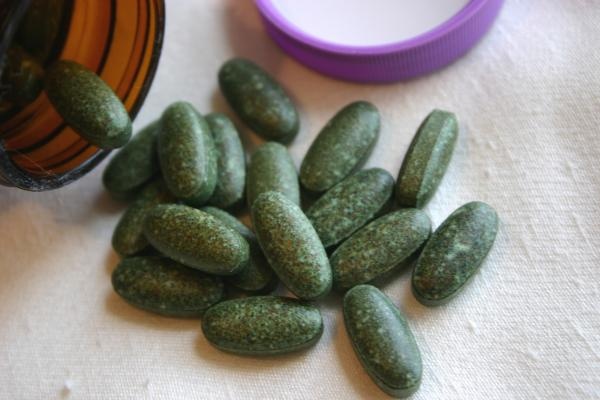
One of the cornerstones of our chiropractic practice is proper nutrition. Indeed, eating a healthy diet and supplementing for the holes in a healthy diet should be a cornerstone of any health related practice. Having worked with thousands of patients over the years, however, I’ve found that very few people ever even give rational though to how they are feeding their body.
The truth is, you will only be able to remain well with adequate fuel and proper maintenance. Your body requires a variety of certain nutrients in order to fight of disease and preserve your health. Too little of certain good nutrients can lead to diseases like neuropathy or cancer. Too much of the bad stuff can lead to heart disease or diabetes. The job of the individual looking to become and stay healthy is to find the happy medium that balances nutritional requirements without consuming excess calories or chemicals from their diet.
It can truly be said that, as Americans, we are overfed but undernourished. The results of this lifestyle are plain. We now suffer from skyrocketing obesity rates and chronic illness continues to rise. Despite having one of the most sophisticated “healthcare” delivery systems in the world, we’re not getting any healthier.
One of the ways we attempt to improve the overall health of all of the patients in our office is through improved nutrition. Some of this comes in the form of nutritional supplementation. I’ve realized over the years that one of the reasons so many people are overweight is that they are getting so few nutrients from their food. Food quality is not today what it was 50 years ago. We’re literally bathed in food that’s high in calories and additives but very low in nutrients. As a result, we end up eating more and more just to satisfy the minimum nutritional requirements of our body. So, we eat and eat and eat just to get to the minimum nutrient requirement your body needs to function. The problem is that the unhealthy foods we are eating are very calorie rich, causing us to literally burst at the seams.
During our patient intake process, I ask patients if they are taking supplements. Not surprisingly, the few people who do take supplements are largely just taking a ‘pot-shot’ in the dark, offering little if any health benefit. Often their decision on certain supplements is not based on health, training, or guidance by a healthcare provider, but is based on advertising. Worse, I’ve had patients who believe or have been told, even by their own healthcare provider, that vitamins are “worthless” or “a waste of money.” The ironic and sad thing is that many of the patients who mistakenly believe this disinformation are some of the most ill new patients we see in our office, often taking the most medication. The bad advice they have been given is sabotaging their health.
Here are several reasons why taking a nutritional supplement is critical to maintaining your health:
1. Many people don’t eat the diet they should – In our busy world, many of us eat a diet of convenience. Meaning, we eat what we can when we can. Our diets are nutrient poor, high calorie, and laced with artificial chemicals. We give little though to what we eat, how we eat, and when we’re eating it. Worse, many people who think they’re eating a healthy diet have never really sat down and evaluated what they really eat during the day. Many are surprised at how shockingly bad their diet really is when they do a 7 day diet intake analysis.
2. General food quality has declined – With an increase in convenience foods, from fast food to microwavable meals, our food quality has suffered. We’ve moved away from cooking and preparing fresh food at home to “picking something up” or “grabbing a bite.” Restaurants also include additional salt and MSG to enhance the flavor of their foods and thus generate repeat customers.
3. Nutrient content of even the good food we eat is on the decline – Think about it. We are growing enough food in the U.S. to feed the largest population ever, over 300 million people. That doesn’t even include the food and food supplies we send to other countries. The problem is that we are growing it on the fewest number of farms in a century. So, what happens when you grow more and more food on less and less land? The nutrient content of the food declines. In other words, a carrot nowadays does not have the same nutrient levels as it did in 1950.
4. How we cook our foods depletes many of the natural nutrients found in healthy foods – The cooking process can often destroy naturally occurring nutritional and digestive enzymes found in raw foods. This is particularly true of fruits and vegetables. Further, cooking and preparing meals often adds undesirable elements such as greases and oils, not to mention chemical additives.
5. As we age we absorb fewer nutrients from our food – Do you honestly think that a 70 year old will absorb the same nutrients from food as a 17 year old? Of course not! As we age, our digestive system ages with us. Just as our muscles may not function like they used to, so does our digestion. It’s critical then to supplement those nutrients for which we may have a problem digesting and absorbing as we age.
6. The medications we take may prevent absorption of certain nutrients and deplete nutrients from our body – There are several examples of medications that affect nutrient absorption. For example, acid reducers for acid reflux neutralize stomach acid which is required for calcium absorption. Likewise, cholesterol medication decreases vitamin D production in the liver, which is also critical to calcium absorption. Cholesterol medication also decreases the body’s production of Coenzyme Q10 which is a critical antioxidant and important for cellular energy. Antibiotics kill bacteria in the gut that produce vitamin K. Even the pain medication you’re taking can deplete a multitude of nutrients from vitamin C to Zinc. And the list goes on…
Not taking a supplement in this age of nutritional decline is a mistake. Even if you do eat a healthy diet, you may not be getting all the nutrients you need to stay well.
So what supplement should you take? That depends on your individual health status and your ability to supplement. I generally recommend that anyone looking to make a serious change in their nutrition consult with a healthcare provider. That being said, make sure that the people you take your health advice from are in the health business and not the disease management business. Just because a provider may understand the cause and treatment of disease, does not necessarily mean that they understand what it takes to be healthy. Managing the symptoms of your disease is not the same as being healthy. Don’t confuse the two.
Supplementation is a crucial aspect to being healthy. With regard to which supplements to choose from the infinite choices, we’ll discuss that in a future blog.
Are You Even Willing To Be Healthy?
Are You Even Willing To Be Healthy?

The great motivational speaker Les Brown once said “The hardest part is getting the person to be an active participant in their own recovery.” As a healthcare provider, I’m faced with this dogging anathema regularly. People want health, but are unwilling to do the work and invest in themselves enough to obtain and maintain it.
Participating in our local community is very important to me and our chiropractic office regularly attends dozens of community events every year, from health fairs to senior expos. Consistently, a regular occurrence during these events are those looking for solutions to the near limitless potential problems that ail the average individual. I probably speak, at least briefly, with thousands of separate individuals at each of the multitude of venues we associate with annually. Of issue, is how few of those people are actually willing to pursue any form of solution to their problem.
Recently, we attended a wellness expo for the local school district. We performed nearly 60 screenings in a single morning, evaluating the attendees for muscular and postural issues. Most of the people I consulted with during the screening were suffering from various conditions, often for years. Most had also “learned to live with it.” What always continues to surprise me about these events is that a person can list a litany of ailments but how very few will actually take any further action to correct them, even when a solution is presented to them. Often, I can offer my confidence that we may have the potential solution they’re looking for to significantly improve or even resolve their issue, yet the person will refuse any additional commitment to being health. My observation is that they are more content in their illness than in the potential to be well.
This is a phenomenon I have seen in broad ranges of patients in all avenues of care. From the person who won’t commit to beginning care to the person who does not follow through with their treatment to completion, there seems to be a generalized non-committal attitude toward being well. I think that even if I could promise a free guaranteed 100% cure, many people would still turn it down. Now, I don’t promise cure and nothing is guaranteed, but you get the point. Many people are unwilling to invest in their own recovery. Why? The answer is fear.
I once heard someone say that F.E.A.R is False Evidence Appearing Real. Fear holds people back. It keeps the greatness of individuals trapped inside them so they never realize their full potential. The same is true of health. You have an amazing healing potential. The question that should be asked is fear preventing you from living up to your full health ability? Is fear limiting your willingness to try alternative treatment options? Is fear stealing your hope?
Fear with regard to health manifests itself in many ways. Fear is a pernicious multifaceted beast that prevents many from realizing wellness. Do any of these describe you?
1. Fear of commitment – Health will never be handed to you on a silver platter. Health is something you must commit to. Health isn’t a matter of happenstance or occurrence by chance of fate. Being healthy is a matter of deliberate intention. Being healthy requires a time investment. You have to invest in time to exercise, time to pick the right foods, time to take care of your spine, and time to manage your stress. The excuse that “I’m to busy” is just that…an excuse. You have to have health as a priority.
Committing to a lifestyle change that includes healthy choices forces you out of your comfort zone. Albert Einstein said “The definition of insanity is doing the same thing over and over again and expecting different results.” Too often, unfortunately, a person will wait indefinitely to magically get well. As the old saying goes, “If your ship doesn’t come in, you may have to row out and meet it.” If you’ve been waiting indefinitely to get better, you’ll ultimately have to come to the realization that change may be your only solution. Change can be uncomfortable but, in my experience, more often change can be extremely fulfilling. Let go of your unrealized fear and make a commitment now to change.
2. Fear of trying something new – If the solutions you’ve always done aren’t working for you, why are you still doing them. It always fascinates me when I talk to a patient who has had back pain for years and has been doing the same interventions they have always tried but they don’t get any better, at least not in any meaningful way. Again, change can be uncomfortable but fear may be preventing you from growing and improving for lack of trying. William Shakespeare has said “Our doubts make us traitors, and make us lose the good we oft might win by fearing to attempt.” Maybe the solution you need is out there. You just haven’t found it because fear has prevented you from even trying anything outside your self imposed comfort zone. What solutions have you eliminated, not because they didn’t work, but because you were too afraid to try them in the first place?
3. Fear of financial expenditure – Of course, in our current economy, this can be a very real fear. Many people are afraid to commit to being healthy because they feel it may be a bad investment. They’re afraid of sending for their health but not getting a likewise return. Well, let me tell you, being sick is a lot more expensive than being healthy. You have to look at your health as an investment for your future. A little time and money invested now may save a literal fortune later.
I understand that money can be a touchy subject for a lot of people but, like a time commitment, my experience has shown me that money is truly less of a mitigating factor than priorities. Frequently, we’ll see patients in our office who, once they calculate an estimated cost of their care plan, claim poverty and will completely discontinue care for financial reasons. Too often however, I’ve found that these same people drive a $50,000 Mercedes, have a personal trainer or a cleaning lady, or even recently remodeled their house. For them, health is just not a priority. Their luxury lifestyle is more important and it may eventually cost hem their health. Do you have your priorities straight?
4. Fear of hope – One of the things I am seeing more and more often at some of the events we work, and with many new patients who present to our office, is a loss of hope. Many have been told they are destined to live with pain or disease for the rest of their life. Many have been told that they are fated for illness or that sickness is inevitable for them. In my opinion, there is no greater disservice done to a person than to steal that person’s hope.
There is always hope for any condition or disease. I don’t think there is a condition out there that doesn’t have a documented case of a miraculous recovery. Too frequently, I’ve seen people with reversible conditions completely give up on the ability to be well because someone foolishly told them it can’t be done. Just because someone says it can’t be done doesn’t make it true. Obviously, there are no guarantees in life and you shouldn’t expect or believe absolutes but that doesn’t mean you should give up. It’s heartbreaking for me to talk to a person who has a condition that we can most likely help, only to have them never commit to wellness because they’ve had their hope stolen from them. Don’t give up! Become the inspired healthy individual you were meant to be!
Ask yourself, are you even willing to get well? Are you willing to commit to you? My experience has shown me that, more often than not, the answer is no. That’s why only about 8% of the population will ever see a chiropractor. That’s why less than 25% of people have a regular exercise regimen. It’s why so few people take vitamins. It’s why fast food is a multibillion dollar industry. It’s why prescription drug sales are on the rise yet, according to the World Health Organization, we’re 37th as a nation in general health. Unfortunately, my experience is that people expect health but reject commitment but you can’t have one without the other.
No one will ever care more about you than you. To that end, no one can force you to be well. Being healthy is a choice. What you have to decide is whether you can move past your fear and commit to being the amazing, inspiring, and unstoppable individual you were built to be.
 The Power Within